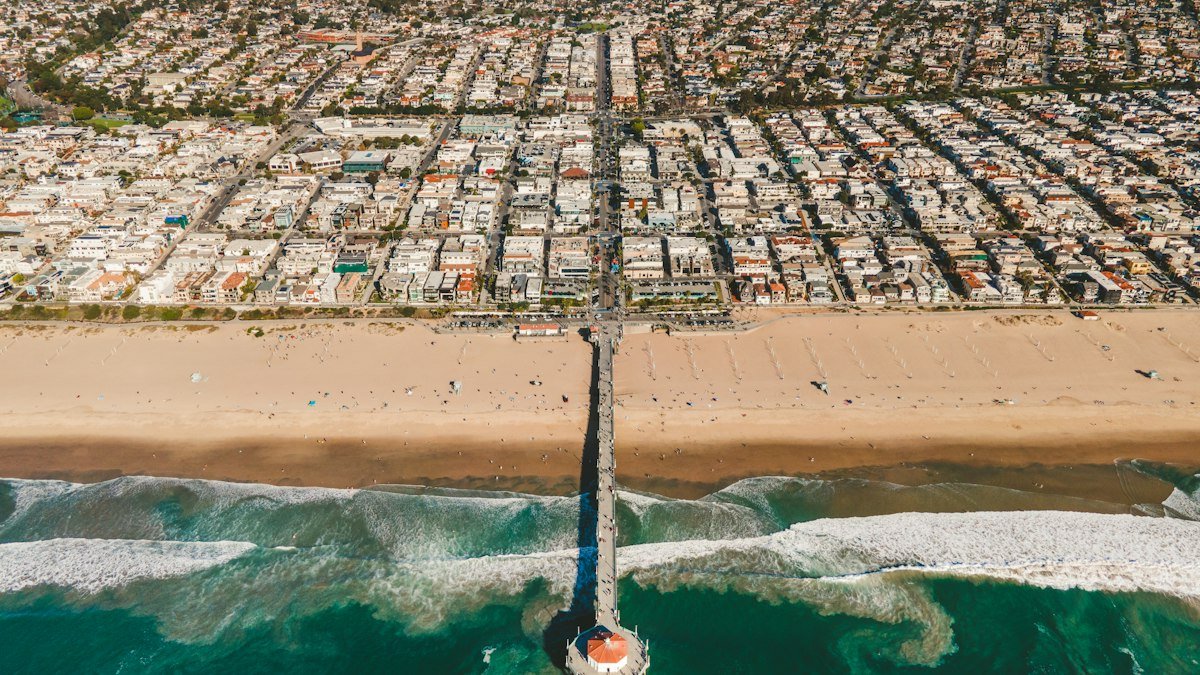
Two identical fourplexes, three miles apart, can produce completely different ten-year outcomes. Not because of the buildings. Because of which city line they sit on.
That is the South Bay story in one sentence. This corridor sits immediately south of the City of Los Angeles, and several of its cities have no rent control ordinance of their own. Buildings there fall under California’s statewide AB 1482 rather than LA’s Rent Stabilization Ordinance, and the gap between those two rulebooks is now the widest it has ever been.
For owners and investors working this market, that distinction drives pricing, underwriting, and strategy more than any amenity or renovation ever will.
The South Bay Advantage: AB 1482 vs. Local Rent Control
Here is the comparison that matters.
| LA City RSO | AB 1482 (statewide) | |
|---|---|---|
| Max annual increase | 4% (permanent, as of July 1, 2026) | 8.7% (LA metro, Aug 2026 to Jul 2027) |
| Formula | Flat cap set by ordinance | 5% + regional CPI, capped at 10% |
| Coverage | 2+ units built before Oct 1, 1978 | Most buildings older than 15 years (rolling) |
| New construction | No rolling exemption | Exempt for first 15 years |
| Vacancy decontrol | Yes, under Costa-Hawkins | Yes, no cap on new tenancy rent |
On July 1, 2026, the City of Los Angeles replaced its RSO increase formula with 90% of the annual change in CPI, subject to a 1% floor and a 4% ceiling, down from a prior ceiling of 8%, across roughly 650,000 rent-stabilized units. The published allowable increase for July 1, 2026 through June 30, 2027 is 3%. Meanwhile AB 1482 permits 8.7% in the Los Angeles metro for the year beginning August 1, 2026.
That is more than double the annual income growth on an AB 1482 building. Compounded across a ten-year hold, the divergence is substantial, and buyers have noticed. Our breakdown of AB 1482 and its key provisions covers the statute in detail, and the current law on rent increases in LA covers the city side.
An important caveat: “South Bay” is not a single regulatory zone. Several cities here have no local ordinance, leaving AB 1482 as the governing framework. Others in the broader area, including Inglewood, do have their own rent control. Verify the specific city, and the specific address, before you underwrite anything. City boundaries in this part of LA County are irregular, and an address that feels like Torrance may sit in an unincorporated pocket or a neighboring jurisdiction.
City-by-City Investor Profiles
El Segundo
A small, tightly held market with an unusual economic base: aerospace, defense, and increasingly tech and media. Space Exploration Technologies, Los Angeles Air Force Base, and a cluster of corporate headquarters anchor daytime population and rental demand.
Inventory is limited and turnover is low, which keeps vacancy tight and supports rents. Entry pricing is high relative to the rest of the South Bay. Investors here are typically buying stability and long-term appreciation rather than yield.
Torrance
The largest city in the South Bay and the deepest multifamily market in the corridor. Strong school districts, a diverse employment base including automotive and healthcare, and a substantial stock of 1960s and 1970s Class B and C buildings that fit value-add strategies.
Torrance buildings generally fall under AB 1482 rather than a local ordinance, which is a meaningful part of why investors favor the market. Pricing sits below the beach cities while offering comparable tenant quality.
Gardena
Lower entry price per unit than Torrance or El Segundo, with solid cash-flow characteristics. Central location with good freeway access, a long-established rental base, and a stock of small to mid-size buildings that suit first-time and scaling investors.
Gardena, like Torrance, generally operates under AB 1482. For investors comparing South Bay options on a dollars-per-door basis, Gardena frequently prices most attractively.
Hawthorne
Sitting between Inglewood and the beach cities, Hawthorne has seen meaningful development activity and benefits from proximity to both SpaceX and LAX. Entry pricing remains moderate. Worth watching for investors who want exposure to the growth corridor without Inglewood pricing.
Carson
No local rent control ordinance, with rental properties falling under AB 1482. Carson’s economy is anchored by the ports, CSU Dominguez Hills, and industrial employment. Cash-flow metrics tend to be strong relative to entry price, and the market is quieter than its neighbors, which sometimes means less competition on acquisitions.
Redondo Beach and Lawndale
Redondo Beach commands beach-adjacent rents with correspondingly higher entry pricing and lower yields. Lawndale offers a lower-priced alternative with a more workforce-oriented tenant base. Both warrant individual regulatory verification before underwriting.
What Is Driving Demand Here
Employment anchors. Aerospace and defense have been the South Bay’s economic backbone for decades, and the sector has expanded rather than contracted with the growth of commercial space. Add healthcare, automotive, logistics tied to the ports, and the tech and media presence in and around El Segundo, and the tenant base is unusually diversified for a single corridor.
Proximity without LA city regulation. Tenants get access to the same regional job market. Owners operate under a materially more permissive framework. That combination is the core investment thesis.
Beach adjacency. Even inland South Bay cities benefit from being a short drive to the coast, which supports rents relative to comparable inland submarkets.
Supply activity signals conviction. The South Bay currently leads Los Angeles in construction activity at roughly 3.9% of inventory under construction, the highest share of any LA submarket per Matthews Real Estate Investment Services Q2 2026 data. Developers building at that rate in this rate environment are expressing a view about where demand is durable.
New supply cuts both ways for an existing owner. It signals a healthy market, and it also introduces competition at the top end. Class B and C buildings with below-market rents are generally better insulated from new Class A deliveries than stabilized Class A product is.
What Buildings Are Trading At
Metro-wide context as of Q2 2026:
- Average LA multifamily cap rate: roughly 5.4% to 5.8% depending on the data source
- Average price per unit: roughly $280,000 to $308,000 metro-wide
- Cap rates have expanded for six consecutive quarters
- Metro vacancy: roughly 4.5% to 5.5%
South Bay pricing varies considerably within the corridor. El Segundo and Redondo Beach trade toward the lower-cap, higher-price end. Gardena, Carson, and parts of Hawthorne sit at higher caps and lower entry price per unit. Torrance generally falls between.
Because submarket pricing moves and published averages lag, the only reliable number for a specific building is a current broker opinion of value built on recent comparable sales in that city. Our guide on valuing your apartment building before selling walks through the methodology.
Strategy for Buyers
Lead with the regulatory filter. Before comparing cap rates across candidate buildings, confirm which framework governs each one. An extra 5.7 percentage points of allowable annual rent growth changes ten-year outcomes more than a 25 basis point difference in going-in cap rate.
Target Class B and C value-add. The South Bay’s 1960s and 1970s stock frequently carries below-market rents. Under AB 1482, you have both a higher annual increase ceiling and full vacancy decontrol on turnover, which makes capturing loss-to-lease considerably faster here than in the City of LA.
Check the 15-year rolling exemption. AB 1482 exempts buildings with a certificate of occupancy issued within the last 15 years, and that window moves forward annually. A building exempt today loses the exemption as it ages, which should be in your long-term model.
Verify soft-story status. Many South Bay cities adopted their own retrofit ordinances modeled on LA’s, and several are separate from the LA program with distinct timelines. Confirm the specific city’s requirements and the building’s compliance standing before closing.
Run the DSCR math early. Commercial lenders typically require 1.20 to 1.25 debt service coverage, and that requirement, not your equity, determines your loan size. For the full underwriting process, see our guide on analyzing a multifamily deal.
Strategy for Sellers
Lead with the regulatory advantage in your marketing. If your building is AB 1482 only, that is a genuine differentiator to buyers comparing it against City of LA product, where the allowable increase is 3% for July 1, 2026 through June 30, 2027 under a 4% ceiling. It belongs in the offering materials, documented, not buried.
Document everything before listing. Certificate of occupancy establishing build date and exemption status, rent roll with move-in dates, trailing 12-month operating statement, leases, and retrofit compliance records. Buyers verify all of it, and clean documentation shortens escrow.
Understand who your buyer is. South Bay buildings attract 1031 exchange buyers, value-add operators, and long-term holders who specifically want out of City of LA regulation. Each values the asset slightly differently, and marketing to the right one produces better pricing.
Know your Measure ULA exposure, or lack of it. This is a meaningful South Bay advantage. Measure ULA applies only within City of Los Angeles boundaries. A South Bay building selling above $5.4 million does not owe the 4% or 5.5% ULA transfer tax that an equivalent City of LA property would. On a $6 million sale, that is roughly $240,000 that stays with the seller.
For the full sale process, see our guide on selling an apartment building in Los Angeles.
Working With a Broker Based in the South Bay
Submarket concentration matters more in multifamily than in residential, because the buyer pool is smaller and much of the best inventory never reaches the public platforms. A broker who transacts in a specific corridor knows which buildings are quietly available, which buyers are actively looking, and what comparable properties have genuinely traded at rather than what they listed for.
Evelyn Baez is a multifamily investment broker with Lyon Stahl Investment Real Estate, based in the firm’s El Segundo office, working with owners and investors throughout the South Bay and greater Los Angeles. She specializes in investment property sales, pricing strategy, and 1031 exchange execution, and works with clients in both English and Spanish.
If you own a building in the South Bay or are looking to acquire one, see our current active listings or reach out for a free, no-obligation valuation.
Frequently Asked Questions
Is the South Bay good for multifamily investment? For many investors, yes. The corridor combines a diversified employment base spanning aerospace, defense, healthcare, logistics, and tech, with several cities that have no local rent control ordinance. That regulatory position allows materially faster income growth than City of LA rent-stabilized buildings, which are limited to a 3% increase for July 1, 2026 through June 30, 2027 under a formula ceiling of 4%.
Which South Bay cities have no local rent control? Several, including Torrance, Gardena, and Carson, operate under California’s statewide AB 1482 rather than a city ordinance. Other cities in the broader area, including Inglewood, do have their own rent control. Always verify the specific city and address before underwriting, since jurisdiction boundaries in LA County are irregular.
What do buildings cost in Torrance versus Gardena? Torrance generally prices higher per unit, supported by stronger schools and a deeper employment base. Gardena typically offers a lower entry price per unit with stronger cash-flow characteristics. Both generally fall under AB 1482, so the choice is usually about yield versus tenant profile rather than regulation.
Why do investors prefer AB 1482 cities? Because the allowable annual rent increase is substantially higher. AB 1482 permits 5% plus regional CPI capped at 10%, which is 8.7% in the LA metro for the year beginning August 2026. The City of LA RSO allows 3% for the year beginning July 1, 2026, under a formula capped at 4%. Over a long hold, that difference compounds significantly.
What drives South Bay rental demand? Aerospace and defense employment, including SpaceX and Los Angeles Air Force Base, plus healthcare, automotive, port-related logistics, and the tech and media presence around El Segundo. Beach proximity and access to the regional job market without City of LA regulation round out the picture.
What are typical South Bay cap rates? They vary by city. Metro-wide LA averages ran roughly 5.4% to 5.8% in Q2 2026, with El Segundo and Redondo Beach trading toward the lower-cap, higher-price end and Gardena, Carson, and parts of Hawthorne at higher caps. A current broker opinion of value is the only reliable figure for a specific building.
Does Measure ULA apply in the South Bay? No. Measure ULA applies only within City of Los Angeles boundaries. South Bay cities are outside it, so sales above $5.4 million do not owe the 4% or 5.5% ULA transfer tax. On a $6 million sale that difference is roughly $240,000, which is a genuine advantage for South Bay sellers.
Is now a good time to buy in the South Bay? Metro pricing has reset roughly 14% below the 2022 peak and cap rates have expanded for six consecutive quarters, so entry pricing is more favorable than it has been in several years. The South Bay also leads LA in construction activity at roughly 3.9% of inventory, which signals developer conviction about durable demand. The offsetting consideration is new supply competition at the top of the market.
How does the South Bay compare to buying in the City of LA? The trade-off is regulation versus scale. City of LA offers more inventory and more submarket variety but caps rent-stabilized increases at 4% and applies Measure ULA above $5.4 million. Much of the South Bay operates under AB 1482 with an 8.7% ceiling and no ULA exposure, at the cost of a smaller and more competitive inventory pool.