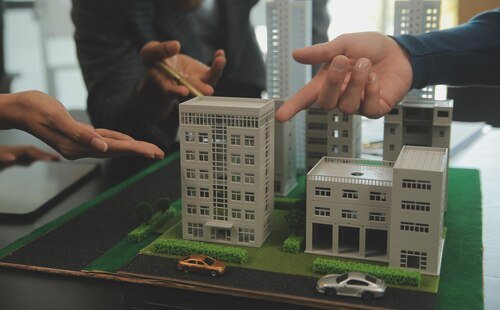
Two buildings sit on the same South Los Angeles block. Same year built, same unit count, same square footage, same condition. One sells for meaningfully more than the other.
The difference usually is not the roof or the parking. It is whether the building comes to you empty, and whether it is already accessible.
Both of those are worth real money in Los Angeles. Neither is well understood by first-time multifamily buyers, and the gap in understanding is where deals get won and lost.
What you are actually buying when a building comes with tenants
Start with the regulatory picture, because in Los Angeles it drives everything else.
The Rent Stabilization Ordinance covers rental properties first built on or before October 1, 1978. That is roughly 624,000 units across about 118,000 properties citywide. In older South LA neighborhoods, that description fits most of the stock on most blocks.
If a building is RSO, three things follow, and they follow the building rather than the seller. A sale resets nothing.
Rent increases are capped. The allowable annual increase is set by the Los Angeles Housing Department and published each year. It has been 3 percent, and a December 2025 ordinance changed the formula going forward to a calculation based on CPI with a floor and a ceiling. Confirm the current rate directly with LAHD rather than trusting any figure quoted in an article, including this one.
Eviction requires just cause. No-fault grounds exist, including owner move-in, substantial rehabilitation that requires vacancy, demolition, and Ellis Act withdrawal. Each carries its own procedural requirements and, in most cases, relocation assistance calculated from the tenant’s length of tenancy and the size of the unit. For a long-tenured household in a larger unit, that payment can reach several months of rent. Miscalculating it is a complete defense to the eviction, which means an owner can execute every other step correctly and still lose.
Protections extend past the RSO. Since January 2023, the City’s Just Cause Ordinance has covered most other rentals, including single-family homes and condominiums. Tenants become protected at the end of their first lease or after six months, whichever comes first.
Now layer the economics on top. In a building where households have been in place for fifteen years under a capped increase, in-place rents can sit far below what the same units would command today. You are buying that gap, and you have no reliable timeline for closing it.
This is why a rent-controlled building trades differently from an unregulated one, and why selling a tenant-occupied building is a different exercise from selling an empty one. The regulations are not going anywhere. The question is how a buyer positions around them.
What "delivered vacant" actually buys
Here is the mechanism, stated precisely, because most listings gesture at it without explaining it.
Under the RSO, a lawful vacancy triggers vacancy decontrol. When a tenant moves out voluntarily, breaches the lease, lets a lease expire without renewal, or accepts relocation assistance, the rent for the next tenant is unrestricted. The owner sets it at market.
One important qualifier: vacancies created through Ellis Act withdrawal or through landlord harassment do not carry that right. The vacancy has to be lawful.
So a building delivered 100 percent vacant hands a buyer four specific things.
Every unit resets to market rent on the first lease. There are no relocation payments to budget. There is no eviction timeline to wait out. And there is no legal exposure inherited from a process the buyer did not run and cannot verify.
It also changes the renovation math in a way people underestimate. Working in an occupied building means scheduling around residents, renovating units one at a time as they happen to turn, and meeting habitability obligations throughout construction. A single unit turn can cost more per square foot than the same work done at scale. An empty building lets a buyer renovate everything at once, at contractor efficiency, and lease the entire property into one leasing season instead of stretching it across a decade.
What a vacant delivery does not do is remove the building from the RSO.
If the property was first built on or before October 1, 1978, it remains RSO after the reset. The new rents simply become the new base, and increases from there are capped again. Anyone who tells you a vacant delivery makes a pre-1978 building permanently decontrolled is wrong, and that misunderstanding has cost buyers real money at closing.
Why ADA compliance is worth paying for
Accessibility in multifamily is genuinely confusing, because four separate bodies of law overlap and most listings use the phrase “ADA compliant” loosely.
Here is the accurate version.
The Americans with Disabilities Act primarily governs public accommodations. In an apartment context that means the leasing office and common areas open to the public, not the individual dwelling units.
The Fair Housing Act is usually the more relevant law for housing. Its design and construction requirements apply to covered multifamily buildings first occupied after March 13, 1991. In buildings with four or more units that have an elevator, every unit is covered. In buildings with four or more units without an elevator, ground-floor units are covered.
California adds two more layers. The Fair Employment and Housing Act extends coverage to buildings with three or more rental units. California Building Code Chapter 11B sets standards that exceed the federal baseline in several places, including turning-space requirements the federal rule does not impose.
The practical consequence is the part that matters commercially. An older building has no obligation to meet those design standards retroactively. So when an older building is genuinely accessible, that is a feature someone paid to install, not a legal minimum someone met.
That shows up in value three ways.
Retrofit cost avoided. Adding accessible routes, compliant bathroom clearances, and appropriate door widths to an existing building is expensive and frequently awkward structurally. A buyer who does not have to do it saves both the capital and the permitting timeline.
Litigation exposure reduced. Multifamily owners in California have faced a rising volume of claims from serial plaintiffs and testers alleging ADA and FHA noncompliance. Even a claim that goes nowhere carries defense costs and exposure to the plaintiff’s attorney’s fees. Accessible common areas and a compliant path to the leasing office meaningfully reduce that surface area.
Tenant pool widened. Accessible units serve seniors, households with mobility limitations, and voucher holders with accessibility requirements. In a business where lease-up speed drives return, a broader qualified applicant pool is worth something on day one.
How this shows up in price
Buyers and lenders price all of this, though the premium is not a fixed percentage and anyone quoting you one is guessing.
What is reliable is the direction.
A vacant building trades on the rents a buyer can achieve. An occupied building trades on the rents currently collected, discounted for the risk and the time required to get to market. Two buildings with identical market-rent potential will never price the same when one of them requires three years and a relocation budget to unlock that potential.
Lenders reinforce the gap. Underwriting projected rents in a vacant building depends on the strength of nearby comps and the credibility of the sponsor’s business plan, and a strong case supports strong proceeds. Underwriting suppressed in-place income in an occupied RSO building limits proceeds regardless of what the property could earn. That difference in available leverage flows straight into what buyers can afford to pay.
Two costs belong in the model from the beginning. Measure ULA applies to Los Angeles sales above $5 million and is calculated on gross sale price rather than on gain, which means it hits regardless of how the deal performed. And buyers planning to roll proceeds forward should understand the timing constraints of a 1031 exchange before they are inside one, along with the common mistakes that disqualify otherwise sound transactions. Both belong in the underwriting alongside the work of learning how to value your apartment building in the first place.
The neighborhood context matters as well. South Los Angeles is absorbing a large volume of new, purpose-built affordable housing, including projects by SoLa Impact along the Broadway and Vermont corridors. When new supply arrives at institutional quality, it raises the baseline expectation for what a renovated unit should look like. A vacant building lets an owner meet that standard immediately rather than chasing it unit by unit over years.
A current example
1009 East 29th Street, Los Angeles, CA 90011. Nineteen units, fully ADA compliant, delivered 100 percent vacant, offered at $5,450,000.
That combination is uncommon in this market. It is the reason the property has drawn interest from buyers who normally pass on South LA product entirely. There is no inherited tenancy, no relocation exposure, no rent roll to reconstruct and verify, and no accessibility retrofit sitting in the capital budget waiting to be discovered.
Six questions to ask before you buy a vacant building
- When was the building first built or first occupied? This single fact determines RSO status and determines which accessibility standards were ever required. Check the address on the City’s ZIMAS system under the Housing tab before you do anything else.
- How did the building become vacant? Voluntary move-outs and lawful terminations preserve vacancy decontrol. An Ellis Act withdrawal does not, and it carries re-rental restrictions and timelines that survive the sale.
- Is the property registered with LAHD and current on registration fees? Unpaid registration can restrict an owner’s ability to raise rent or pursue eviction, and it transfers to you.
- What does “ADA compliant” mean on this specific building? Ask for the inspection report or CASp report rather than accepting the marketing language. Ask which standard was applied and when it was assessed.
- What are the real market rent comps within a half mile, on renovated product? Not the seller’s pro forma. Pull them independently or have your broker pull them, and look at what actually leased rather than what was asked.
- What is the realistic lease-up timeline and carrying cost? A vacant building produces zero income until it does not. Model that gap honestly, including debt service, insurance, utilities, and security during renovation.
Frequently Asked Questions
What does “delivered vacant” mean in a multifamily listing?
It means the seller is transferring the building with no tenants in place. The buyer can renovate freely and set rents at market on the first lease rather than inheriting existing tenancies, rent levels, and any disputes attached to them.
Does buying a vacant building remove it from LA rent control?
No. If the building was first built on or before October 1, 1978, it remains subject to the Rent Stabilization Ordinance. Vacancy decontrol allows the owner to set the initial rent for a new tenant at market, but annual increases after that are capped again under the same ordinance.
Is an apartment building required to be ADA compliant?
Not in the way most people assume. The ADA mainly governs public-facing areas such as leasing offices. Fair Housing Act design requirements apply to covered multifamily buildings first occupied after March 13, 1991, and California law extends coverage further. Older buildings generally were never required to meet those standards, which is precisely why genuine accessibility in an older building is a real asset rather than a baseline.
Why do vacant buildings sell for more in Los Angeles?
Because the buyer captures the gap between in-place rents and market rents immediately, without relocation payments, eviction timelines, or legal risk. In a city where that gap can be large and slow to close, removing the delay has measurable value that both buyers and lenders will pay for.
What is vacancy decontrol?
Under the Los Angeles RSO, when a rental unit becomes lawfully vacant, the owner may set the rent for the next tenant at market with no cap. Increases after that are capped again. Vacancies created through Ellis Act withdrawal or harassment do not qualify.
Is South LA a good market for multifamily investment?
It has active new development, strong rental demand, and pricing below the Los Angeles County median. It also carries the same regulatory complexity as the rest of the city. The answer depends on the specific building and on the buyer’s timeline and appetite for repositioning work.
Thinking about a South LA multifamily purchase?
Evelyn Baez Nguyen has closed more than 50 multifamily transactions across South Los Angeles and the South Bay. Browse active listings, request a free valuation if you already own, or contact us to talk through your criteria before you start touring.
Sources: Los Angeles Housing Department, Rent Stabilization Ordinance and Just Cause Ordinance guidance. Los Angeles Municipal Code Chapter XV. 42 U.S.C. section 3604(f)(3)(C) and 24 CFR section 100.205. California Building Code Chapter 11B.
This article is general information about the Los Angeles market. It is not legal, tax, or investment advice. Rent regulation and accessibility requirements are property-specific and subject to change. Consult a qualified attorney before acting.