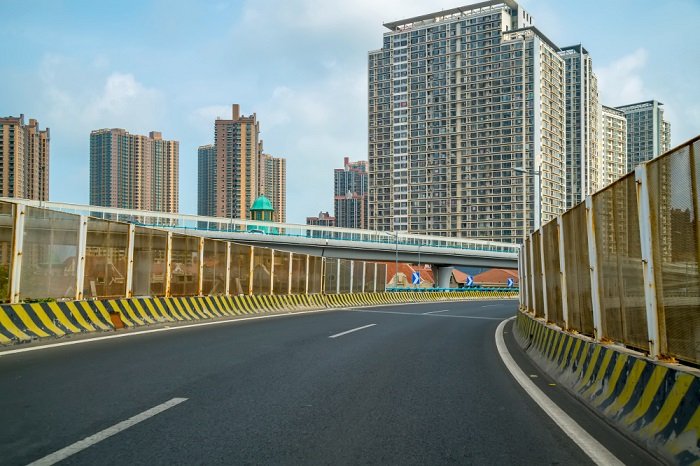
Third Street runs east to west across Central Los Angeles. It starts in Beverly Hills, passes through the Fairfax District beside The Grove, skirts Hancock Park and Koreatown, drops into Westlake, and ends downtown at Alameda.
Along maybe five miles of that route, developers have delivered or started roughly a thousand new apartments in the past three years.
The projects have almost nothing in common. One is luxury housing stacked over a Whole Foods across from the Farmers Market. Another is an all-electric, fully affordable building tucked beside a 1970s senior tower. A third is an eight-story podium a block from a subway station in the densest neighborhood in Los Angeles County.
That variety is the story. Here is what has been built, what is building, and what all of it means if you own older multifamily anywhere in this part of the city.
One clarification before the list, because it trips people up constantly. Third Street and Third Avenue are two different places in Los Angeles. Third Street is the east-west thoroughfare described above. Third Avenue is a north-south residential street in the Arlington Heights and Mid-City area near Washington Boulevard, several miles to the south. This article covers Third Street.
Corridor pipeline at a glance
|
Project |
Address |
Neighborhood |
Developer |
Units |
Status |
|---|---|---|---|---|---|
|
The Daphne / Bloom on Third |
6300 W 3rd St |
Fairfax District |
Holland Partner Group, Regency Centers, ARBA Group |
311 |
Opening 2026 |
|
1999 |
1999 W 3rd St |
Westlake |
Jonathan Rose Cos., Wakeland Housing |
137 |
Completed 2025 |
|
640 S St. Andrews Pl. |
626 to 634 St. Andrews Pl. |
Koreatown |
Jamison Services |
230 |
Nearing completion |
|
3325 Wilshire Blvd |
3325 Wilshire Blvd |
Koreatown |
Jamison Services |
236 |
Adaptive reuse, in progress |
|
401 S Western Ave |
401 S Western Ave |
Koreatown |
Ennabe Properties |
73 |
Under construction |
|
3216 W 8th St |
3216 W 8th St |
Koreatown |
Mike Barry |
20 plus 60 hotel rooms |
Approved |
The Daphne and Bloom on Third: 311 units at Third and Fairfax
The largest project on the corridor sits on the former Town and Country site at 6300 West 3rd Street, directly across from The Grove and the Original Farmers Market.
It is really two projects stacked on one another, which is why the naming confuses people.
The ground-floor retail component is called Bloom on Third. Regency Centers is developing it in partnership with the ARBA Group, anchored by a two-level Whole Foods Market occupying roughly 65,000 square feet inside a larger commercial program of about 84,000 square feet.
The residential floors above are called The Daphne. Holland Partner Group built them, and they contain 311 studio, one-, two-, and three-bedroom apartments.
MVE + Partners designed the eight-story building. Amenities include an athletic club, a screening theater, and an outdoor terrace, with parking for close to a thousand vehicles in a podium garage. The massing uses cutouts and setbacks to step the building down toward the adjacent streets and toward the elementary school on the south side of the site. A pedestrian paseo cuts through the ground floor, connecting Ogden Drive to the existing shopping center.
The project was scheduled to open in the second quarter of 2026.
For a sense of scale: 311 units is a larger single delivery than most Central Los Angeles submarkets absorb in an entire year, and it is landing in one of the highest-traffic retail locations in the city.
1999: 137 fully affordable units in Westlake
Four miles east, at 1999 West 3rd Street just past Alvarado Street, a very different building opened in March 2025.
The project is branded simply 1999. It was the first ground-up development on the West Coast for Jonathan Rose Companies, built as a joint venture with Wakeland Housing and Development Corporation. The finished building runs seven stories and roughly 100,000 square feet, with 137 studio, one-, and two-bedroom apartments reserved for households earning between 30 and 80 percent of area median income. Total development cost came to about $74 million.
Brooks + Scarpa led the design team, joined by TINA CHEE Landscape Studio and Argento / Graham. Roughly 10,000 square feet is given over to resident amenities, including fitness and yoga rooms, lounges, workspaces, and open space.
The building is all-electric, targets LEED Gold certification, and incorporates low-flow plumbing, native planting, and a greywater-ready irrigation system. That is worth flagging for existing owners rather than skipping past. New construction is being built to a standard that older buildings will eventually be asked to move toward, and the compliance timeline matters more than most owners currently assume.
The site work is genuinely clever. The developers split a lot they already controlled, building 1999 next door to Miramar Towers, a 157-unit senior housing property from the 1970s that they also own, and connecting the two with a breezeway. The capital stack combined transit-oriented development incentives, low-income housing tax credits, and two bonds issued through the California Statewide Communities Development Authority.
Koreatown: the densest stretch of the corridor
Between Fairfax and Westlake, Third Street passes along the edge of Koreatown, which deserves separate treatment because the development logic there works differently.
Koreatown holds roughly 120,000 residents inside 2.7 square miles, making it the most densely populated district in Los Angeles County. Development is driven less by land assembly than by two forces.
The first is Transit Oriented Communities incentives, which let developers build denser than base zoning allows in exchange for a set-aside of deed-restricted affordable units, usually a small share of the total. The second is adaptive reuse of the neighborhood’s aging Wilshire Boulevard office stock, much of which has struggled to hold tenants since 2020.
Jamison Services dominates on both fronts.
At 626 to 634 St. Andrews Place, just west of Wilshire/Western Station, Jamison is finishing an eight-story building with 230 studio, one-, and two-bedroom apartments over about 800 square feet of retail and a 133-car garage. MVE + Partners designed it, the same firm behind The Daphne. The site was entitled using TOC incentives, and 23 units are set aside as extremely low-income affordable housing.
On the adaptive reuse side, Jamison is converting the 13-story building at 3325 Wilshire Boulevard into 236 apartments. The company has also filed to convert the office property at 3700 Wilshire Boulevard, the one locals recognize for its large front lawn, into housing.
Smaller infill continues alongside the institutional work. At 401 South Western Avenue, Ennabe Properties is building 73 one- and two-bedroom apartments over roughly 7,000 square feet of commercial space on a former car wash site, with nine units set aside at the very low-income level. At 3216 West 8th Street, the City Council approved a seven-story project combining a 60-room hotel with 20 apartments, four of them extremely low-income, replacing an existing rent-stabilized building whose tenants hold a right to return.
Why Holland Partner Group keeps showing up
Holland Partner Group is a Vancouver, Washington firm that has become one of the most active multifamily developers on the West Coast, and its Los Angeles activity is worth tracking on its own terms.
The company built the residential component at Third and Fairfax while simultaneously carrying a 271-unit project in Downtown Long Beach and additional work elsewhere in Southern California. That pattern, one institutional developer running large podium projects across several Southern California submarkets at once, is the shape of the current cycle.
The capital behind these buildings is institutional. The product is consistent from site to site. And site selection consistently favors dense, transit-served, retail-adjacent locations rather than cheaper land further out.
It is happening against a backdrop where new construction is slowing across much of the region. Institutional capital is still building, but selectively, and in fewer places than it was five years ago. Knowing which corridors made the cut is genuinely useful information, and it sits inside the broader picture of LA commercial real estate heading through 2026.
For a private owner of a four to twenty unit building, this tells you two practical things. It tells you who is setting the standard your tenants compare you against. And it tells you which corridors sophisticated money believes will still be attracting renters in fifteen years.
What Class A supply does to older buildings nearby
This is the section that matters if you own a smaller, older property in Mid-Wilshire, Koreatown, or Westlake.
New Class A product does not usually take your tenant. The household paying for a podium garage, an athletic club, and a rooftop terrace was probably never renting your 1962 fourplex. What new supply does instead is reset expectations. When a renter tours a new building and then tours yours, the comparison sets the discount they expect to receive. Renovated units in older buildings capture a share of that spread. Unrenovated units capture less of it every year that passes.
The second effect lands on land value. TOC and density bonus incentives mean a well-located older building is sometimes worth more as a development site than as an income stream. Owners of low-density parcels near transit stations in Koreatown have been discovering this for a decade. Whether that counts as good news depends entirely on whether you want to sell.
The third effect lands on the affordable side. Buildings like 1999, along with the affordable components embedded inside TOC projects, are pulling income-qualified households into brand-new, all-electric, amenity-equipped housing. If your building competes for renters in the 50 to 80 percent AMI range without those amenities, that competition is real and it is growing.
One caution for anyone underwriting off this article.
Nearly every older building in these three neighborhoods falls under the City of Los Angeles Rent Stabilization Ordinance, which covers properties first built on or before October 1, 1978. The status attaches to the building and survives a sale, which is why a rent-controlled building has to be underwritten on the allowable increase published by the Los Angeles Housing Department rather than on market rent trends. For what that has meant in practice, look at how rent increases have actually moved across the city over the past two years.
Deciding between submarkets in this part of town? The full comparison is here: Mid-City vs Koreatown. If your search reaches into the South Bay, the same treatment of new development in Hawthorne covers that market project by project.
Frequently Asked Questions
What is being built on 3rd Street in Los Angeles?
The two largest projects are The Daphne and Bloom on Third at 6300 West 3rd Street in the Fairfax District, with 311 apartments over a Whole Foods-anchored retail center, and 1999 at 1999 West 3rd Street in Westlake, a 137-unit fully affordable building completed in 2025. Substantial additional development is under way in Koreatown between them.
What is Bloom on Third?
Bloom on Third is the ground-floor retail component of the mixed-use project at 6300 West 3rd Street, developed by Regency Centers with the ARBA Group and anchored by Whole Foods Market. The apartments above it are branded separately as The Daphne, which is why searching one name does not always surface the other.
Who built the apartments at Third and Fairfax?
Holland Partner Group built the 311-unit residential portion, The Daphne. MVE + Partners served as architect. The building runs eight stories with parking for close to a thousand vehicles.
Who developed 1999 W 3rd Street?
Jonathan Rose Companies, in a joint venture with Wakeland Housing and Development Corporation, with Brooks + Scarpa as lead architect. It was Jonathan Rose Companies’ first ground-up development on the West Coast, at a total cost of roughly $74 million.
Is Koreatown still adding housing?
Yes. Koreatown remains one of the most active development submarkets in Los Angeles, driven by Transit Oriented Communities incentives near its rail stations and by an ongoing wave of office-to-residential adaptive reuse along Wilshire Boulevard, much of it carried out by Jamison Services.
Is 3rd Street the same as 3rd Avenue in Los Angeles?
No. Third Street is a major east-west thoroughfare running from Beverly Hills to Downtown. Third Avenue is a north-south residential street in the Arlington Heights and Mid-City area near Washington Boulevard. They are several miles apart and the confusion is common.
Own multifamily in Mid-Wilshire, Koreatown, or Westlake?
New supply changes what your building is worth, in both directions. Evelyn Baez Nguyen can walk you through where your property sits against current comps. Request a free valuation or contact us.
Sources: Urbanize LA coverage of 6300 W. 3rd Street, 1999 W. 3rd Street, 640 S. St. Andrews Place, 401 S. Western Avenue, 3216 W. 8th Street, and 3325 and 3700 Wilshire Boulevard. Larchmont Chronicle. Beverly Press. Multi-Housing News. Jonathan Rose Companies. Regency Centers. Los Angeles Housing Department.
This article is market commentary and is not legal, tax, or investment advice. Project status changes. Verify with the developer or the Los Angeles Department of City Planning before relying on any detail.