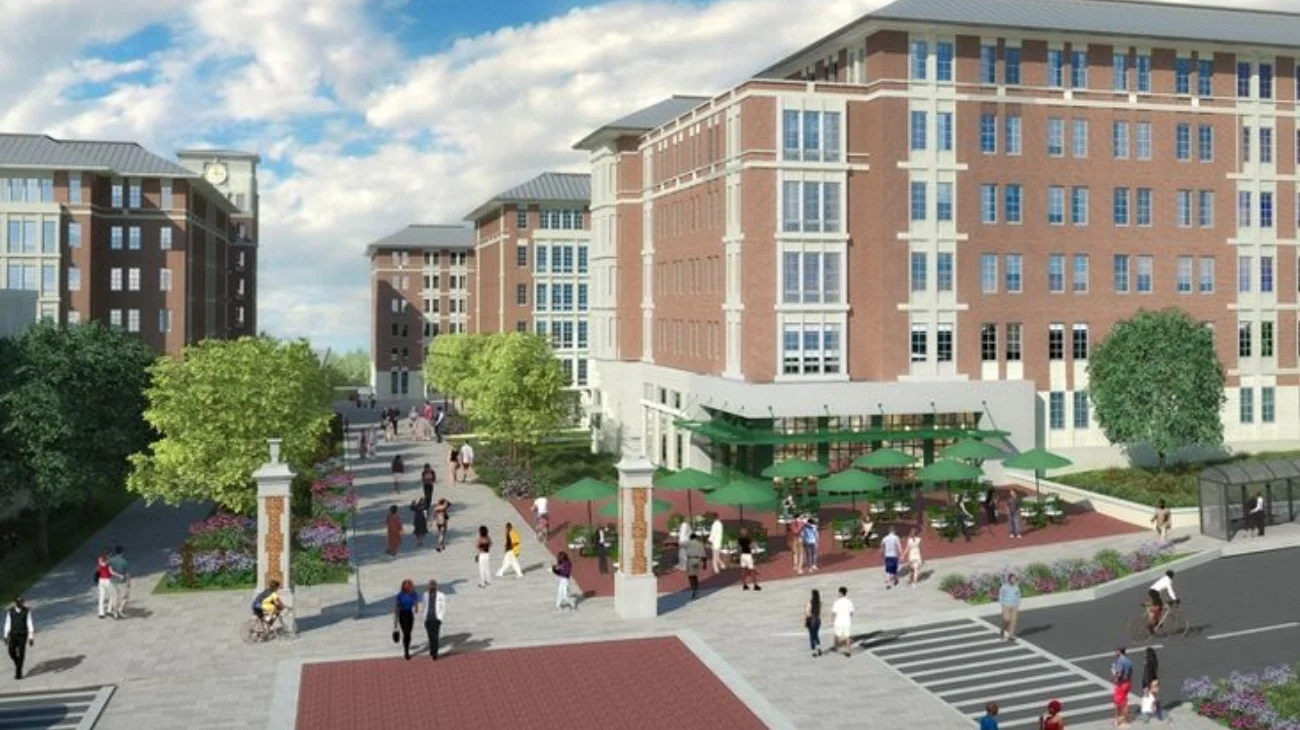
The student housing market around the University of Southern California (USC) is changing. For years, new apartments and dorms were built to keep up with growing student demand, especially from international students. But now, developers are slowing down, and fewer new projects are being built. Rising rents, economic challenges, and the option for online or hybrid courses are some of the reasons why this may be happening. Let’s talk in detail why the USC housing development is slowing and how it can affect students today.
The Boom Years: USC’s Growth and Housing Demand
Over the last decade, USC grew rapidly. It attracted a vast student population from across the U.S. and around the world. The jump in enrollment outpaced the USC student housing supply. And this fueled a wave of new development in areas surrounding campus such as University Park and North University Park. To meet some of that growth, private developers planned large purpose-built communities near campus.
“Private projects aimed to deliver hundreds to thousands of beds to facilitate USC students.”
Some developments scheduled for completion around 2026 were projected to add significant new capacity to the market.
Why Did the New USC Housing Development Slow Down?
The new USC housing development slowed down due to rising construction costs, higher rents, and declining demand from international and local students. Economic pressures make many students unable or unwilling to pay premium prices for housing. Meanwhile, online and hybrid courses reduce the need to live near campus. Therefore, developers are pausing new projects.
Did You Know?
There was recently a 21% drop in apartment units under construction nearby USC.
1. Rising Construction Costs
Construction expenses for materials, labor, and permits have surged in recent years. Developers face higher budgets and longer timelines. These make building new off-campus USC student housing less profitable and more of a hassle. Even planned projects near USC are being delayed or downsized to manage costs. These financial pressures are some of the main reasons slowing the overall expansion of housing near campus.
2. Declining International Student Enrollment
International students have historically been a major driver of USC housing demand. Recent visa restrictions and global uncertainties have reduced foreign enrollment. This has directly affected the occupancy rates for new developments. With fewer international students needing on-campus or nearby apartments, developers are being cautious about investing in large housing projects. And hence, new USC development is slowing down.
3. Economic Pressure on Students
Rising rents, inflation, and limited budgets make premium housing less accessible for students. In fact, many students now prefer shared apartments, cheaper off-campus rentals, or living further from USC to save money. This reduces the financial viability of high-end or luxury student housing projects. Developers have responded to this shift by pausing new construction near campus.
4. Growth of Online and Hybrid Courses
Classes at USC are flexible now; students can choose online or hybrid courses. Students nowadays prefer these options more over on-campus classes. This reduces the immediate need for students to live near campus. Some hybrid students also choose off-campus locations that are cheaper or more convenient for commuting. With fewer students needing proximal housing, developers face uncertain demand projections. This trend has directly contributed to the slowdown in new USC housing projects.
Nationally, the number of newly completed student housing beds dropped from approximately 44,746 to 35,703.
USC’s On-Campus Supply Still Lags Enrollment
Even with USC’s new projects, like USC Village, adding about 2,500 beds, there still aren’t enough dorms for students. The university has fewer than 7,000 beds for over 20,000 undergraduates, and housing for graduate students and families is even more limited. This means most upperclassmen, graduate students, and families have to find off-campus apartments. While this creates demand for private developers, new construction is also slowing down.
Key Takeaway: The on-campus housing supply is not enough, so private developments are not as doomed as they seem.
What the New Housing Development Slowdown Means for Students & USC Community
As aforementioned, the housing situation around the University of Southern California is in transition. Demand is still strong, but changing economic conditions are changing the overall student approach toward housing. As a professional real estate agent, here’s how I see the slowdown is impacting students, developers, and the USC Community.
For Students
- More Choices, But More Competition: Fewer new housing projects compel students to compete for existing apartments and rooms. Affordable places close to campus are especially hard to find.
- Price Matters More Than Before: Because rent is expensive, many students start searching earlier, share apartments with roommates, or choose to live farther from campus to save money.
For Developers
- More Careful Planning: Instead of building quickly like before, developers are now planning projects more carefully. They are thinking about what students can realistically afford.
- Focus on Practical Housing: Rather than luxury apartments with expensive amenities, new student housing is focusing on simple, cost-efficient designs that are more affordable for students.
Looking for housing options around USC? Or maybe need some consultation on USC student housing? Feel free to reach out to me. As an experienced commercial real estate agent and a Master’s student at USC, I’m familiar with the market trends and nuances. This allows me to guide my clients in the best way possible.
For the University of Southern California
- Balancing Growth and Housing: The university needs to continue expanding student housing while making sure it stays affordable. Plus, it should not put too much pressure on nearby neighborhoods.
- International Student Strategy: Changes in visa policies and international enrollment will play an important role in future housing demand around USC.
Conclusion
The USC new housing development is directly tied to student enrollment patterns. Another thing that impacts the flux is rising construction costs. Students are also more careful about how much rent they can afford. Because of this, developers are slowing down new projects. However, the need for housing near USC still exists. In the future, developers and the university will need to focus on building more affordable and practical housing options.